
How Radical Deflation could save Gen Z
The affordability crisis is widespread and increasing. Deflation is a fair solution.

The affordability crisis has been growing for a long time, but as we get deeper amid massive global flux around technology (AI) and society (politics) there doesn’t seem to be a solution even on the table. The problem has been gaining attention with the latest discussion revolving around Mike Green’s declaration that anything less than $130,000 a year in America is poor by the standards used in the 1960s. Even if that is the high end of the range, we can all agree the low end is much higher than anything captured by minimum wage or average salary metrics.
The idea of the blue-collar American dream has been globalized to death. The problem is known, but a solution is far from consensus. There is no path out of this problem that avoids a redistribution of wealth; it is just a matter of what form it takes. I am proposing what I think is the fairest way.

Reversing History, Fast
We have arrived here after 55 years of one of the greatest monetary experiments in history. In 1971, the golden leash was removed from the dollar when the paper money was no longer redeemable for gold. The charts of asset prices from that point all clearly display the effects of globalization and inflation (which facilitated the export of jobs and manufacturing capacity in exchange for dollar debt). There are other factors as well, but these two issues have such a high weighting for causation that it isn’t worthwhile discussing others here.

So if inflation and globalization got us here, could it be as easy as reversing these two practices and watching the wounds heal? Yes. Will it be painful? Yes. Will it be fair? No, but the end result will be an improved outlook for the future and a proper understanding of the tradeoffs of the decisions that were made in this context for the past 55 years.
The reverse of inflation is easy to name, deflation. The reverse of globalization is tariffs and border control. We know which levers to pull, and now it is a question of how hard to pull them. The speed of the change is a function of how much pain are people willing to accept as the policy changes reprice assets and labor. Unfortunately, we can’t do this instantly because it is necessary to build infrastructure (manufacturing capacity of all sorts) and we also need to train the labor force. This can occur much faster than the 55-year process it took to get here, but it could maybe get to a good point in 10 years if we really focused on it and 20 years if we wanted to make the transition softer, which may not be quick enough for Gen Z.

The Deflationary Asset Fall
We live in a world of debt. Debt has been a wonderful tool for those who had access to the cheapest loans in the 5000-year history of debt. Cheap debt that is used to buy scarce (real estate, gold, commodities, etc.) or productive (companies, factories, stocks) has given those buyers leverage. The assets alone would have hedged against general inflation, but the leverage has amplified the effect and rewarded them even more than the growth charts display because we only see the asset prices as compared to other goods. We are not able to factor out how much natural deflation or other productivity gains are also being masked in these calculations.
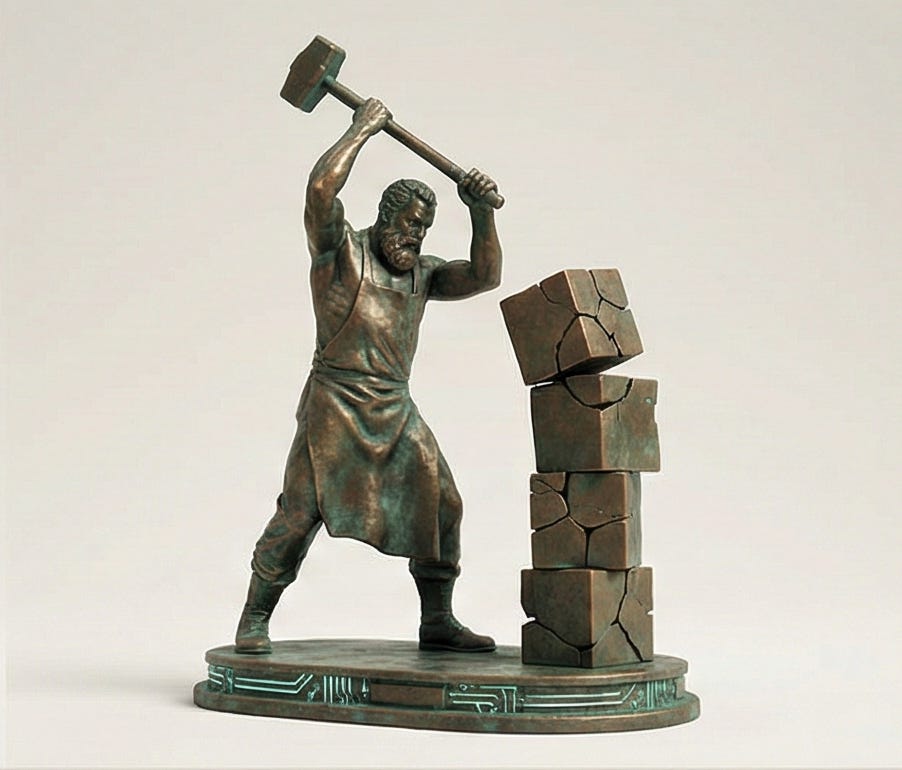
Productivity gains from Robotics, AI and normal improvements could possibly result in 10% deflation for a year. A single year of deflation at this scale would immediately put pressure on all debt holders and debtors. The debtors would go from a world in which each year they paid off the debt with ever-devaluing money. The world of debt leverage that is normal right now would be a massive expense that most debtors would be unable to meet. This means defaults. This is where the debt holders suffer. They should be happy that they are being paid in ‘better’ currency, but the defaults on these payments will result in them owning collateral worth much less than assessed at issuance.
The result: those who benefited most from past policies would now suffer proportionally more. The gains are Reversed! Real Estate (buying a home) has been the largest hurdle that Gen Z has not been provided an opportunity to overcome. Real Estate in this scenario would fall heavily. The defaults again would be born by the debt holders. If all the home prices fell by 75%, owners could default on their mortgages and buy back in at a much more reasonable price. Those who were just renting would have a great advantage because they wouldn’t have to go through bankruptcy and could have a chance to own a home.

Why Labor is always falling behind
Rising labor costs are generally framed as a negative. This stems from those framing the narrative relying on cheap labor and profiting from the claim that high labor costs make everything too expensive. There is truth in this statement which is why it works so well, but there is also the other side that labor is where the majority of people derive their income. Those same business owners would all agree they’d have more business if everyone was wealthier, but they just don’t want to be the ones passing on. The wealth must come from somewhere else. But where? That is the paradox of money: it is not consumed when it is spent, it passes to someone else. Only time and desire limit transactions. If everyone’s salary doubled, the cost of goods would rise but in most cases they wouldn’t double because labor is only a portion of the input, which means on net that workers would be wealthier at the end of this rebalancing.
This does not occur naturally in the current system. The new money entering the system goes first to those closest to the creation point, namely the financial system and government. Eventually it filters down as prices increase and labor demand increases and wages rise, but since it always occurs in that order the wages are always behind the curve and are thus relatively poorer at the end of the process.
For example suppose government spending on infrastructure and health care is the main driver. The building and health care companies get the money first and as it filters out from those groups to their employees, stockholders and suppliers it takes time and all individuals and groups are buying up the assets they need/want first. The construction company, hired to do the infrastructure build, buys concrete at current prices. That demand pushes prices up. Suppose this takes a year. Then suppose it takes another year for wages to rise (as workers need more to survive). But the money hasn’t reached the local homeowner, so they pay higher concrete prices for a year before any wage gain offsets them. Now imagine this same process across the entire economy and you can see how labor is constantly falling behind. This is called the The Cantillon Effect.

Labor is repriced. Everyone benefits.
Increasing wages isn’t a lever that can be directly pulled (except for maybe minimum wage, but that is a failed policy). Labor will always be at the end of the chain pricing changes. The striking part about being stuck at the end is that labor again benefits from deflation and the reversing of history. Prices will be falling this time before wages are cut to match demand. Deflation means that labor becomes wealthier during this process, not poorer. No other change is necessary.
Labor should also be removed from the market. The blocking of outsourcing and labor importation will increase demand for labor, which should allow for the economy to support a middleclass family with a single income earner, which is now inconceivable to most. Saving money also becomes natural, because delayed gratification is rewarded. If saving money for a year yields greater purchasing power, you are incentivized to save rather than spend. Mainstream economists hate this, but in a deflationary world it will become normal.
Things will be turbulent, but the economy under deflation is fairer and more stable. Economists must move from a 3% inflation target to a -3% inflation (deflation) target. This is how we reverse the economic sins of the past 55 years.
I call for the economists to Repent and Deflate!